
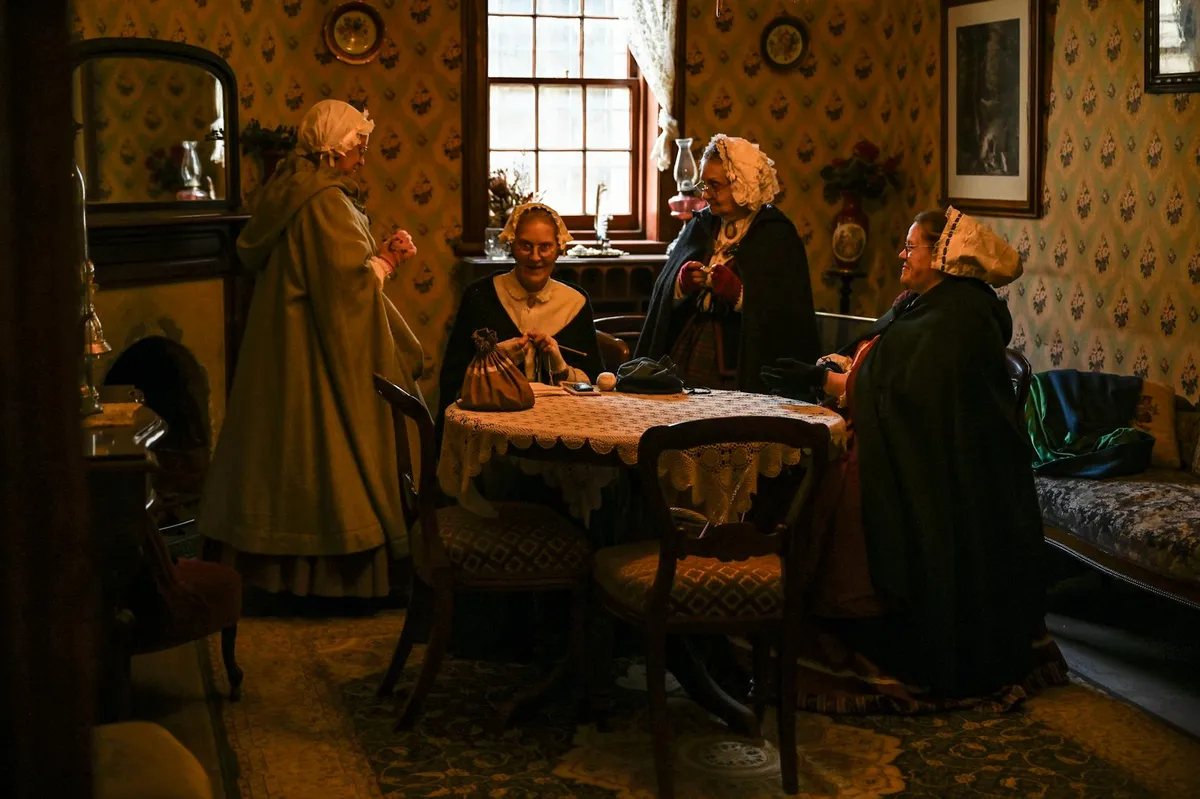
The 19th-century American household was a significant cardplaying setting, with the parlor games of the period producing a cultural infrastructure that the contemporary cardroom inherits in ways that the popular histories generally do not engage with. The household games — bezique, euchre, whist, cribbage, piquet, and their kin — were played in family and social settings on a scale that has been substantially forgotten in the contemporary cultural memory, and recovering the social history of the parlor cardplaying culture is methodologically interesting for cultural readers who want to understand what the cardroom actually is.
The parlor games were the cultural mainstream of 19th-century American cardplaying in a way that the cardroom games of the saloon culture were not. The parlor games were played in the household, in family settings, in social-visit contexts, and in mixed-gender environments that the saloon culture explicitly excluded. The cultural footprint of the parlor games was substantially larger than the saloon-game footprint, and the cultural infrastructure — the rule books, the etiquette manuals, the household-furniture conventions, the social conventions about when and how cards were played — that the parlor games produced shaped American cardplaying culture more deeply than the more-cinematic saloon-game culture did.
What the parlor games actually were
The parlor games of the 19th-century American household included a substantial diversity of specific games, with the most-popular variants reflecting both transatlantic influence and regional American development. Bezique, a partnership card game of French origin, was widely played in the American parlor through the middle and later 19th century, with substantial documentation in the period's household-game literature. Euchre, with its German antecedents and its American development through the Midwest and the upper South, was probably the most-widely-played household card game of the period and produced a cultural footprint that extended into the early 20th century.
Whist, the English-origin partnership game that would eventually develop into contract bridge in the early 20th century, was played in the American parlor with substantial regional and class variation. The game was associated with educated and prosperous social settings in some American regional contexts and with more general household-game settings in others, with the cultural meaning of playing whist therefore varying across the cultural geography of the period.
Cribbage, with its English origins and its longstanding household-game status on both sides of the Atlantic, was probably the most-democratically-played of the major parlor games. The cribbage board itself was a household object found across a wide range of American class settings, and the game's playing conventions allowed two-player engagement that the larger parlor games could not produce.
Piquet, faro, and the various solitaire games rounded out the parlor-game repertoire, with the specific game-choice in any given household reflecting both regional convention and family preference. The repertoire was substantial, and the cultural infrastructure that supported it — printed rule books, household etiquette guides, social conventions about appropriate game-choice for different social settings — was sophisticated in ways that have been substantially forgotten in the contemporary cultural memory.
The gendered structure of parlor cardplaying
The parlor cardplaying culture was substantially mixed-gender in ways that the saloon-game culture was not, and the gender dynamics of the parlor games produced a distinct social setting that the parallel saloon culture could not match. Women were full participants in the parlor games, with the household-game literature of the period treating women's cardplaying as the default rather than as exceptional. The parlor was a space where women's social participation in the cardplaying culture was unremarkable, and the social conventions of the parlor reflected that participation in ways that the trade-press cultural memory of cardplaying has not always preserved.
The mixed-gender setting produced specific cultural conventions about appropriate play, about acceptable conversation during play, about the integration of cardplaying with other social activities — refreshments, music, conversation — that the parlor games supported. The parlor was a social environment in which cardplaying was one activity among several, integrated into the broader household-social culture of the period, rather than a singular focus the way the saloon-game setting tended to be.
The gendered structure of the parlor also produced economic and social-class implications that are methodologically interesting. The parlor itself, as a specific household space distinct from other rooms and dedicated to social-receiving and social-visiting activities, was a class-marked household feature — not every American household had a parlor in the period under discussion, and the household-furniture conventions that the parlor implied carried social-class significance. The parlor-cardplaying culture was therefore substantially associated with the middle and upper-middle social-class settings that had parlors to play in, with the working-class household cardplaying happening in less-formal settings and producing a somewhat different cultural footprint.
The household-game literature
The cultural infrastructure that supported the parlor-game culture included a substantial body of printed household-game literature — rule books, etiquette manuals, popular treatises on specific games, periodical coverage in the women's and household magazines of the period — that documented and shaped the practice of household cardplaying. The literature is methodologically informative both for the specific game-rules it preserved and for the broader cultural-historical record it provides about how American households actually played cards in the period under discussion.
The most-cited single text in the cultural history of 19th-century American cardplaying is probably Hoyle's Games — the American adaptation of Edmond Hoyle's 18th-century English treatise on whist and other card games, expanded through successive American editions to cover the broader American parlor-game repertoire. The Hoyle tradition is methodologically interesting both for the rules it codified and for the cultural authority it claimed — the citation of Hoyle as the rule-arbitration source for household-cardplaying disputes became a cultural convention that extended well into the 20th century.
The household-game periodical literature is methodologically more accessible to contemporary readers than the rule-book tradition because the periodical writing engages with the cultural and social setting of cardplaying in ways that the rule-book tradition does not. The women's magazines of the later 19th century — Godey's Lady's Book, Peterson's, Harper's Bazar — included cardplaying coverage that situated the parlor games in the broader household-social culture in ways that contemporary readers can engage with directly to understand what the parlor cardplaying actually looked like.
The saloon as the cultural counter-setting
The saloon-game culture of the 19th-century American cardroom was the cultural counter-setting to the parlor games, with the contrast between the two settings producing a substantial body of cultural-discourse about the appropriate uses of cardplaying. The saloon was masculine-coded, commercial, associated with the more-publicly-visible gambling subculture, and engaged with the cardgames that the parlor culture explicitly excluded — poker, faro-as-house-bank-game, the more straightforwardly gambling-focused cardroom games.
The cultural-discourse contrast between the two settings produced periodic moral panics about cardplaying that contemporary readers may not be familiar with. The temperance and social-reform movements of the period engaged with cardplaying as part of the broader social-reform agenda, with the saloon-game culture being the primary target of the reform efforts and the parlor games typically being defended as appropriate household amusements. The two cardplaying cultures coexisted across the period under discussion, with each operating in its own cultural-social space and the contrast between them producing meaningful cultural conversation about the appropriate cultural place of card games in American life.
What the parlor games gave the contemporary cardroom
The parlor-game culture's cultural inheritance to the contemporary cardroom is substantial and worth recovering for cultural readers interested in what the contemporary cardroom actually is. The household-game infrastructure that the parlor culture produced — the rule-book tradition, the etiquette conventions, the integration of cardplaying with social activity beyond the game itself, the gendered conventions that the parlor games supported — became part of the broader American cardplaying culture in ways that have shaped the contemporary cardroom even where the specific parlor games have substantially faded from the contemporary repertoire.
The contemporary home-game culture in particular inherits substantially from the parlor tradition. The household poker game — played among friends, in a domestic setting, integrated with other social activities, with the household-cultural conventions about appropriate play that the parlor tradition produced — is a direct cultural descendant of the parlor games, even when the specific game being played is one of the post-war poker variants that the parlor culture would not have recognized. The cultural infrastructure of the home game traces to the parlor far more directly than to the saloon.
Recovering the parlor-game cultural history matters for understanding the contemporary cardroom because the standard cultural memory of cardplaying has been substantially shaped by the saloon-game folklore that produced the more cinematic cultural record. The actual cardplaying history of 19th-century America was substantially more household-and-parlor-centered than the popular memory acknowledges, and the cultural footprint of the parlor games is part of what makes the contemporary cardroom what it is.