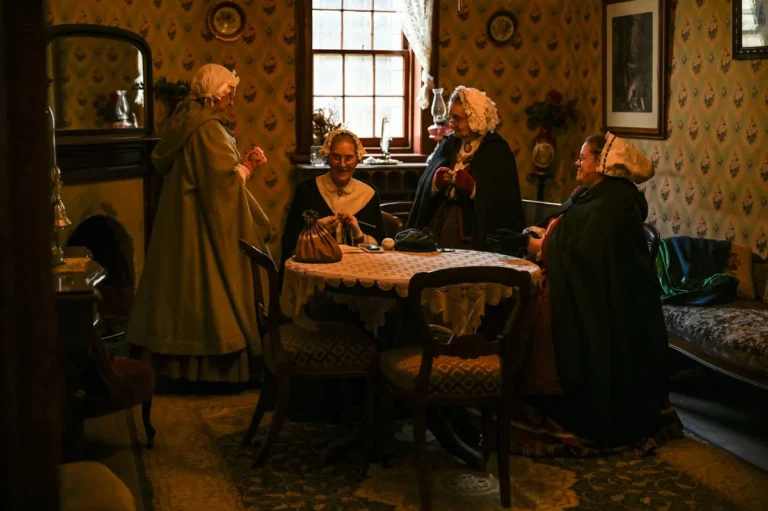

The 19th-century Russian literary tradition treated the cardroom with substantial sustained attention, producing a body of work that engaged with the gambling subculture and the cardplaying social setting at a level of literary substance that the parallel 19th-century literatures of other national traditions did not consistently match. The major texts of the Russian cardroom-literature tradition — Pushkin's "Queen of Spades" (1834), Dostoevsky's The Gambler (1866), Lermontov's "Mascarade" and other shorter works, Tolstoy's cardroom scenes in War and Peace and Anna Karenina, Chekhov's several cardplaying pieces — together constitute a substantial literary corpus that contemporary readers interested in the cardroom as a cultural setting can engage with as a coherent subject.
The Russian tradition's engagement with the cardroom was conditioned by specific cultural-historical features of the 19th-century Russian intellectual and social environment. The Russian gambling subculture of the period had transatlantic connections — the spa-resort gambling establishments of Western Europe were frequented by the Russian noble and intellectual classes through the 19th century — that produced a specific cultural setting for the literary engagement. The Russian intellectual class's engagement with the gambling subculture was also conditioned by the specific social-economic structure of 19th-century Russia, with the noble class's relationship to debt, to the family estate, and to the broader economic structure of the period producing the cultural-material context in which the gambling subculture operated.
Pushkin's Queen of Spades
Pushkin's "The Queen of Spades" (1834) is the foundational text of the Russian cardroom-literature tradition, with the story's engagement with gambling at the level of cultural-psychological-fantastical analysis having established methodological conventions that the subsequent Russian literary cardroom-writing substantially inherited. The story works at multiple levels simultaneously — as a tale of card-game fortune and the obsessive pursuit thereof, as a psychological portrait of the character Hermann whose engagement with the gambling subculture produces the narrative arc, as a fantastical engagement with the supernatural elements that the story incorporates, and as a cultural document of the Russian gambling subculture of the period in which the story is set.
The cardroom in "Queen of Spades" is a specific cultural-material setting — the noble salons of early-19th-century St. Petersburg, the faro tables of the period's gambling subculture, the specific game-mechanics that the story's plot depends on — that Pushkin engaged with at a level of cultural-historical specificity that the story's broader narrative and psychological content does not require. The cardroom-cultural specificity is methodologically interesting in its own right because it establishes that Pushkin was treating the gambling subculture as a substantive cultural-historical subject rather than as a generic narrative setting.
The story's cultural-memory footprint extends beyond the immediate Russian literary context because the story was adapted into Tchaikovsky's opera "The Queen of Spades" (1890), with the opera's subsequent cultural footprint having extended the story's engagement with the cardroom into the broader cultural-memory in ways that the original story alone would not have produced. The Pushkin-Tchaikovsky cultural artifact is one of the substantial 19th-century cultural artifacts that engaged with the cardroom as a serious cultural-subjective subject.
Dostoevsky's The Gambler
Dostoevsky's The Gambler (1866) is the most-substantial Russian literary engagement with the cardroom as a cultural subject, with the novella's engagement combining cultural-psychological-social analysis at a level that no parallel 19th-century European text quite matched. The novella was written under specific biographical circumstances — Dostoevsky's own substantial engagement with the gambling subculture of the period, his financial difficulties that the writing of the novella was intended to address, the contractual deadline that conditioned the actual composition of the text — that gave the writing a specific cultural-material weight that the more-distanced literary engagements with the cardroom often lacked.
The Gambler's engagement with the cardroom operates at the level of cultural-psychological portraiture that Dostoevsky's broader literary project was developing through the period. The protagonist Alexei Ivanovich's engagement with the roulette table at the German spa-resort setting where the novella unfolds is treated as a psychological-social-cultural phenomenon worth sustained attention, with the resulting portraiture having shaped how the broader cultural-literary conversation thought about gambling compulsion and the social-psychological structure of the gambling subculture.
The novella's engagement with the broader social setting of the 19th-century spa-resort gambling subculture is methodologically substantive in its own right. The spa-resort gambling establishments of the period — Baden-Baden, Hamburg, Wiesbaden, and the other major German and Western European destinations — constituted a specific transnational cultural setting for the European gambling subculture, with the Russian noble and intellectual class's engagement with that setting producing specific cultural-historical phenomena that the novella documents at a level of social-historical specificity that contemporary historical readers can engage with directly.
Lermontov, Tolstoy, Chekhov
The Russian literary cardroom tradition extends substantially beyond the Pushkin-Dostoevsky axis to include important contributions from Lermontov, Tolstoy, and Chekhov among other 19th-century Russian writers. Lermontov's "Mascarade" engages with the cardroom in the context of the broader cultural-dramatic setting that the play develops, with the cardplaying scenes carrying substantial dramatic and cultural weight in the play's overall structure. The play's engagement with the gambling subculture is conditioned by the specific cultural-historical setting that Lermontov was writing within, and the resulting cardroom-literature contribution is methodologically significant in its own right.
Tolstoy's cardroom scenes in War and Peace and Anna Karenina engage with the cardplaying subculture at a level of cultural-social specificity that the novels' broader literary projects support. The cardroom-scene engagement in War and Peace is conditioned by the historical-cultural setting of early-19th-century Russian noble life that the novel reconstructs, with the cardplaying being one social activity among several that the novel's noble characters engage with as part of the broader social-cultural setting. The cardroom engagement in Anna Karenina is similarly conditioned by the social-cultural specificity of later-19th-century Russian noble life, with the cardplaying being integrated into the broader social-economic structure that the novel documents.
Chekhov's several cardplaying pieces — including the short stories that engage with the gambling subculture and the cardroom-scene material in his plays — extend the Russian literary cardroom tradition into the late-19th and early-20th-century period that bridges the high-19th-century Russian literary tradition and the early-20th-century Russian literature that the post-Imperial period would produce. The Chekhov material is methodologically significant for the cultural continuity it establishes across the historical transition that the late-Imperial period represented.
What the Russian tradition contributed that the parallel traditions did not
The Russian literary cardroom tradition contributed a particular kind of engagement with the gambling subculture that the parallel 19th-century literatures did not consistently match. The Russian engagement was substantially psychological-cultural-social in its methodological orientation, with the cardroom being treated as a setting where character-psychological development could be sustained at length and where social-cultural specificity could be engaged with as a substantive subject in its own right.
The parallel French 19th-century literary tradition's engagement with the cardroom — in Balzac, in Maupassant, in the broader French realist tradition of the period — was substantially shorter in its individual engagements and more focused on the gambling subculture as a setting for plot rather than as a sustained subject of psychological-cultural analysis. The parallel English 19th-century tradition's engagement was even more limited in its sustained engagement with the cardroom, with the gambling-subculture appearances in the major English realist novels being typically brief and instrumental rather than sustained and substantive.
The German and Eastern European 19th-century literary traditions produced their own cardroom-related material, but the Russian tradition's sustained psychological-cultural-social engagement was distinctive in its level of attention to the cardroom as a serious literary subject. The cultural-historical reasons for the Russian distinctiveness include the specific structure of 19th-century Russian noble and intellectual culture, the specific transnational engagement of the Russian intellectual class with the European spa-resort gambling subculture, and the specific literary-cultural conventions of the Russian realist and psychological tradition that the major 19th-century writers were developing through the period.
Why the Russian tradition matters for cultural readers
The 19th-century Russian literary cardroom tradition matters for contemporary cultural readers because the tradition's sustained literary engagement with the gambling subculture represents one of the substantial 19th-century cultural-literary engagements with the cardroom as a serious subject. The tradition's methodological conventions — the psychological-cultural-social orientation, the sustained engagement with the cardroom-social-setting specificity, the integration of the cardroom-engagement with the broader literary projects of the major writers — established conventions that the subsequent literary tradition substantially inherited and that the contemporary literary engagement with the cardroom can still draw on.
The tradition also matters for cultural readers interested in the broader cultural-historical footprint of the cardroom in 19th-century European cultural life. The Russian literary engagement with the spa-resort gambling subculture, with the noble-class cardplaying of the St. Petersburg salons, with the broader social-economic structure that the gambling subculture operated within, provides cultural-historical documentation that contemporary readers can engage with as both literary text and as historical-cultural source-material.
The contemporary cardroom-literature conversation can usefully engage with the Russian tradition as a substantial cultural-historical achievement that the broader cardroom-literature conversation has not always recognized. The Pushkin-Dostoevsky-Lermontov-Tolstoy-Chekhov constellation of 19th-century Russian cardroom-engagement is one of the substantial 19th-century literary engagements with the subject, and contemporary readers interested in serious cultural writing about the cardroom can draw on the tradition's methodological example for what sustained literary engagement with the cardroom can actually look like when it is undertaken with substantial cultural-literary seriousness.