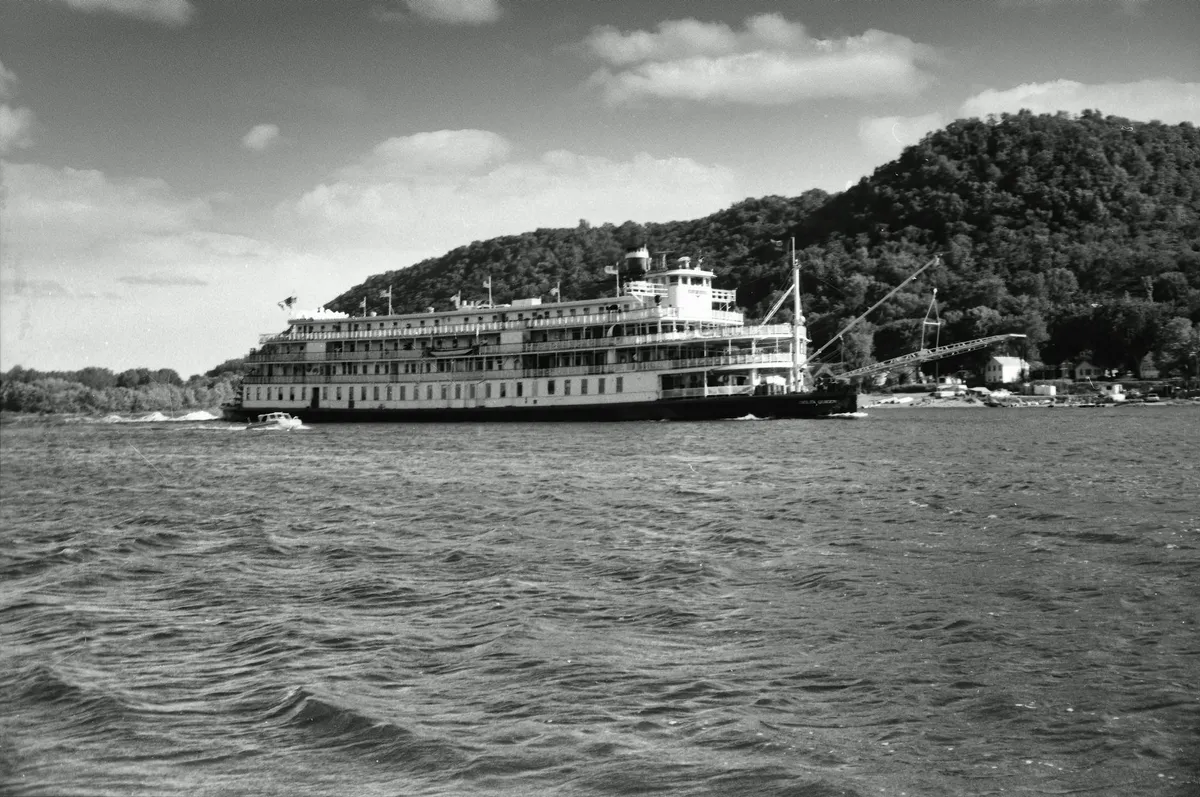
The standard account of poker's American origin — the one that appears in popular histories, in cardroom oral tradition, and in the documentary-television treatments of the game — places poker's emergence on the antebellum Mississippi riverboats. The story has a satisfying narrative shape: the game develops along the river commercial trade in the 1820s and 1830s, spreads through the steamboat passenger culture, and disseminates from there into the broader American cardplaying world. The riverboat-origin account is not wrong in its broad outline, but the historical record is more textured than the standard story acknowledges, and the complications are interesting in their own right for readers willing to spend time with them.
The pre-riverboat European antecedents
Poker did not emerge from nothing on the Mississippi. The game inherited structural features from several earlier European card games, with the inheritance pattern documented in card-game scholarship that the popular accounts generally do not engage with. The Persian game of as-nas, the French game of poque, the German game of pochen, and the English game of bragg all contributed structural elements that became part of what would eventually be called poker in the American context. Each game contributed something — the betting-round structure, the hand-ranking concept, the bluffing mechanic — and the eventual American game was a composite that drew on the inheritances in ways that are not fully traceable in the available documentary record.
The French connection is the most-documented of the antecedents. New Orleans was the American port through which French card-playing culture entered the broader American context, and the New Orleans documentary record from the early 19th century shows poque being played as a recognizable forerunner of what would become poker. The transmission from poque to poker involved name shift, rule modification, and structural change, but the lineage is documented in the gambling-related New Orleans civic records of the 1810s and 1820s in a way that the riverboat-origin account tends to skip past.
The riverboat documentary record itself
The riverboat documentary record from the 1820s through the 1850s does establish that card games of various kinds were played on the steamboats, that betting was widespread among the passenger classes that could afford to bet, and that professional players — what the riverboat folklore would eventually call sharps and what the riverboats themselves called professional cardplayers without the moral coloring — were a regular feature of the steamboat travel experience. The folklore exaggerates the prevalence and dramatizes the social dynamics, but the underlying documentary record supports the basic picture that the riverboats were a significant cultural venue for the gambling subculture that included poker among the games played.
What the documentary record does not establish, however, is that the riverboats were the unique site of poker's American emergence. The same kinds of card games were being played in the New Orleans saloons, in the river-town gambling establishments, and in the household and parlor settings throughout the lower Mississippi cultural region during the same decades. The riverboats were one site among several where the game was developing, and the prominence the riverboats received in the later folklore reflects the cultural memorability of the steamboat setting rather than the unique historical importance of that setting for the game's development.
What the folklore is actually doing
The riverboat-origin folklore performs cultural work that is methodologically interesting on its own terms. The story gives poker a specific, photographable, narratively-satisfying American origin in a setting — the Mississippi steamboat — that occupies a substantial place in the broader American cultural imagination. The folklore makes the game feel American in a particular way, distinct from its European card-game antecedents and embedded in a specifically American cultural setting that readers and viewers can picture without prior research.
The folklore also performs the work of giving the game a romantic origin that the more complicated actual history cannot match. The reality — that the game developed across multiple sites in the lower Mississippi cultural region through the 1820s and 1830s, drawing on European card-game antecedents that arrived through the New Orleans port and disseminated through both shipboard and land-based commercial culture — does not have the same narrative compression as the riverboat-origin story. The folklore wins out as the popular account because it does the cultural work that the actual history is too complicated to do.
The complications that get edited out
Several specific complications get edited out of the standard riverboat-origin account in ways that are worth noting for readers interested in the actual history. The game's development in the lower Mississippi region happened in a thoroughly racially-segregated cultural environment, with the documentary record establishing that Black cardplayers — both enslaved and free — were part of the broader cardplaying culture of the region during the period of the game's development, with their participation and contributions edited out of the riverboat folklore that took hold in the later cultural memory.
The economic context of the game's development is another element that gets edited out. The lower Mississippi commercial economy of the antebellum period was a slavery-based agricultural economy, with the wealth that funded the steamboat travel and the professional cardplaying subculture coming substantially from the cotton trade and from the broader plantation economy that made the lower Mississippi region commercially significant in the first place. The cultural setting of the game's development is not separable from the economic and social system that produced the wealth being gambled on the steamboats.
The gendered context is a third element that the standard account elides. The riverboat-poker culture as it appears in the folklore is overwhelmingly masculine, with the women in the picture being either passengers in other parts of the steamboat or working women in the broader gambling-related labor economy of the period. The historical record on women's involvement in card-playing in the cultural region during the period is more textured than the folklore allows, and the parlor cardplaying culture in particular included substantial women's participation that is not reflected in the riverboat-origin story.
The post-Civil War transformation
The game that emerged from the lower Mississippi development period was structurally different from the contemporary game in ways that the standard account also tends to skip past. The hand-ranking conventions, the betting-round structure, and the variant rules that distinguish the different forms of contemporary poker all developed substantially after the Civil War, in the saloon and gambling-establishment culture of the post-war American West and Midwest. The river-trade game of the antebellum period was a more limited variant of what the post-war development would produce.
The post-war transformation involved multiple developments — the spread of the game through the new western settlements, the codification of rule variants in the popular gambling literature of the 1870s and 1880s, the development of the home-game culture that brought poker into household and social-club settings, and the eventual emergence of the casino-table version that would shape the 20th-century game. None of these developments are visible in the riverboat-origin story, which essentially treats the game as fully-formed in the antebellum period.
Why the actual history matters
The actual history of poker's American emergence matters for cultural readers because it is more interesting than the folklore version. The composite-development picture — multiple antecedents, multiple sites, multiple cultural and economic contexts, post-war transformation — produces a story about American cultural development that the riverboat-folklore version cannot match. The game becomes more deeply embedded in American cultural history when the actual development is engaged with, rather than less.
The actual history also matters for understanding what the game is now. The contemporary game carries the marks of its composite development — the European antecedents in the basic mechanics, the Mississippi riverboat moment in the betting culture, the post-war Western saloon period in the variant rules, the 20th-century home-game culture in the social setting most contemporary players actually experience. Understanding the game in its current form requires understanding the development process that produced it, and the riverboat-origin folklore is not sufficient for that understanding.